Decisions go wrong for all sorts of reasons - bad timing, bad information, the wrong people in the room, plain bad luck.
Look at any one decision and the reason it went wrong seems specific to that day, that situation. Look at a lot of them and you start to see patterns - a handful of reasons that keep repeating themselves. This is one of them: what people thought they were deciding and what they were actually deciding were two different things.
A decision can be wrong before the choice is wrong.
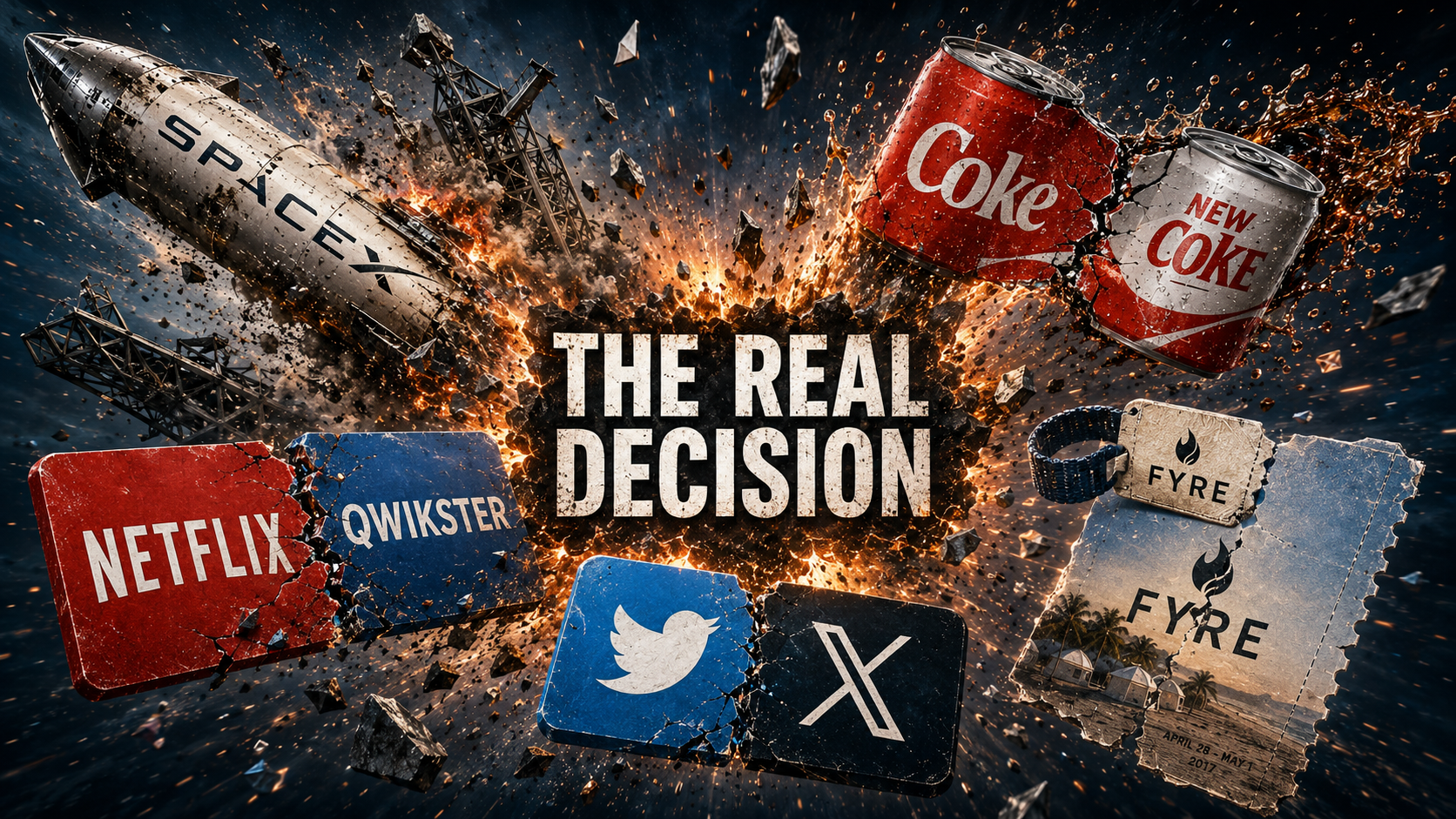
SpaceX's first full flight test of Starship is a good place to watch this happen. From the outside it looked like a rocket test - does the thing fly. And by SpaceX's own rules, the rocket not making it was fine. They build by pushing things until they break and seeing what they learn, and they'd said before launch that losing the rocket was entirely possible. So the bit that looked like the disaster, the rocket tumbling and blowing up, was more or less the bit going to plan.
But the launch was never just about the rocket. There were several things being tested at once, all wrapped up in the same event. The rocket was one. The launch pad, and everything the launch relied on, was another. A reinforced, water-cooled steel plate that was meant to protect the pad wasn't ready in time, and the bet was that the existing concrete would hold for one launch. It didn't. The engines tore the pad apart and threw chunks of it across the site. That was the one that actually hurt - it cratered the pad, flung concrete and debris a long way across the site, kicked up a wide dust cloud, and meant the whole pad had to be rebuilt before anything could fly again. It set the programme back, and it brought regulatory problems too - the damage and the debris triggered a review that kept Starship grounded until it was sorted. The cost showed up on the ground, not on the rocket - and the pad had never really been treated as a decision at all. It just sat there as an assumption, underneath a test everyone agreed was about the rocket.
The question on the table was "are we ready to test the rocket?" The question they were actually answering was "are we ready to test everything this one launch puts to the test, all at the same time?" And the answer to that one was no.
This isn't a rocket thing. You see it anywhere a decision gets called one thing and turns out to be another.
New Coke looked like a decision about taste. It was really a decision about what the brand meant to the people who drank it, and that was the question that decided how it went.
Fyre Festival was viewed as marketing and ticket sales. Underneath, it was a decision to actually go and build, in the real world, the whole thing the marketing had promised - a luxury festival on a remote island, with the villas, the food, the logistics and the big-name acts that came with it - and that's the decision nobody really sat down and made.
Netflix splitting off Qwikster was framed as tidying up the business. To the people paying every month, it was a decision about whether they could still trust the service and use it in the way they were accustomed to.
Renaming Twitter to X looked like branding. What was actually being decided was whether to throw away a word people had already turned into a verb.
In most of these the choice might even have been right, judging by the question they thought they were answering. But the real decision was a different one.
So before the usual question - is this the right move - there's an earlier one that's easy to skip past. Identifying the real decision doesn't make it any easier, and it won't hand you the right answer. But it does stop you doing a careful job of answering a question nobody was actually asking.
If this feels familiar, start here:
👉 Run the Second Look Decision Diagnostic to check your decision
👉Read about checking business decisions
👉 📖 Read more on Second Look blog
This article was originally published on https://www.advancementquest.com/blog/are-you-making-the-decision-you-think-you-are-making